

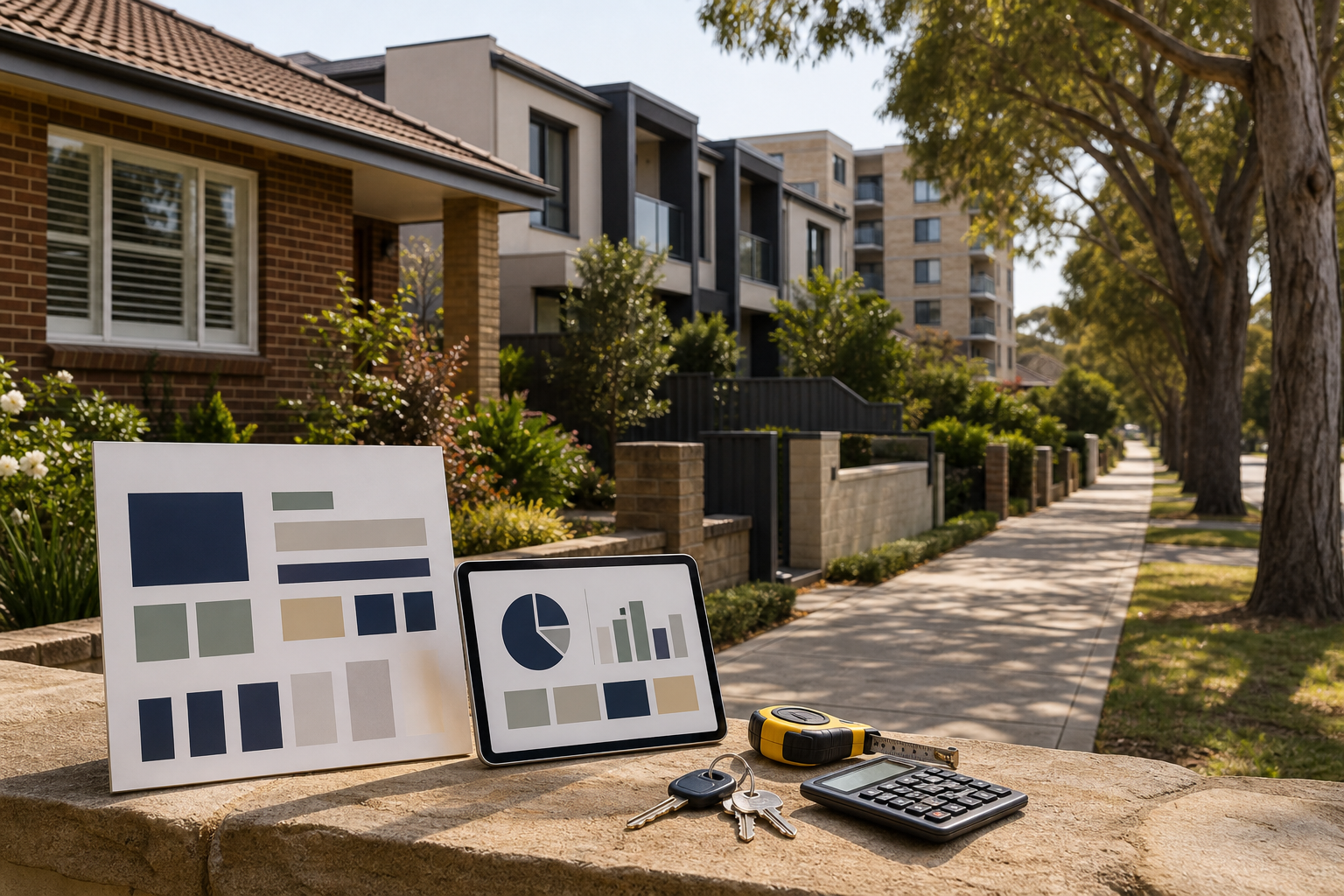
Property sales history: how buyers can use local evidence before making an offer

Before making an offer, buyers should look beyond the asking price and build a picture of what similar properties have actually sold for in the local area. Sales history is useful evidence, but it works best when it is combined with careful property checks and a realistic ownership budget.
This article is general information only and is not legal, financial, building or valuation advice. Ask appropriately qualified professionals to assess the specific property, contract and finance position.
Start with genuinely comparable properties
Compare several recent sales in the same suburb or nearby area. The most useful comparisons usually share important characteristics such as property type, land or floor area, age, bedroom and bathroom count, parking, condition and position. A detached house should not be compared casually with a townhouse or apartment simply because the prices appear similar.
Adjust for the differences
Local evidence needs context. Renovation quality, natural light, aspect, a corner position, traffic exposure, views, outdoor space and access to transport or services can all affect how a property compares with another sale. Treat an online estimate or one standout transaction as a reference point rather than a final answer.
Check the property and contract separately
A sales comparison does not reveal hidden building defects, drainage problems, pest activity or contract risks. Arrange appropriate inspections and have the contract reviewed before signing. NSW Government guidance explains the importance of due diligence and conveyancing, but buyers should obtain advice for their own circumstances.
A practical pre-offer checklist
- Gather several recent, genuinely similar local sales.
- Record the differences in condition, position, land or floor area and inclusions.
- Review the property at different times where practical and investigate obvious risks.
- Allow for transaction costs, repairs, insurance and ongoing ownership expenses.
- Keep your offer within a comfortable budget, not only the maximum a lender may approve.
- Use an independent building professional and conveyancer or solicitor where appropriate.
Sources
News insight
 Sep 09, 2026
New housing supply in NSW: what buyers should check before choosing a development
An evergreen guide to checking new housing supply, planning, inclusions, access and ongoing costs be...
 Sep 08, 2026
Shared driveways and parking: practical access checks before buying in NSW
Shared driveways, parking arrangements and property access can affect daily convenience and future d...
 Sep 07, 2026
How to compare home loan options before buying in NSW
An evergreen guide to comparing home loan costs, features and repayment comfort before buying proper...