

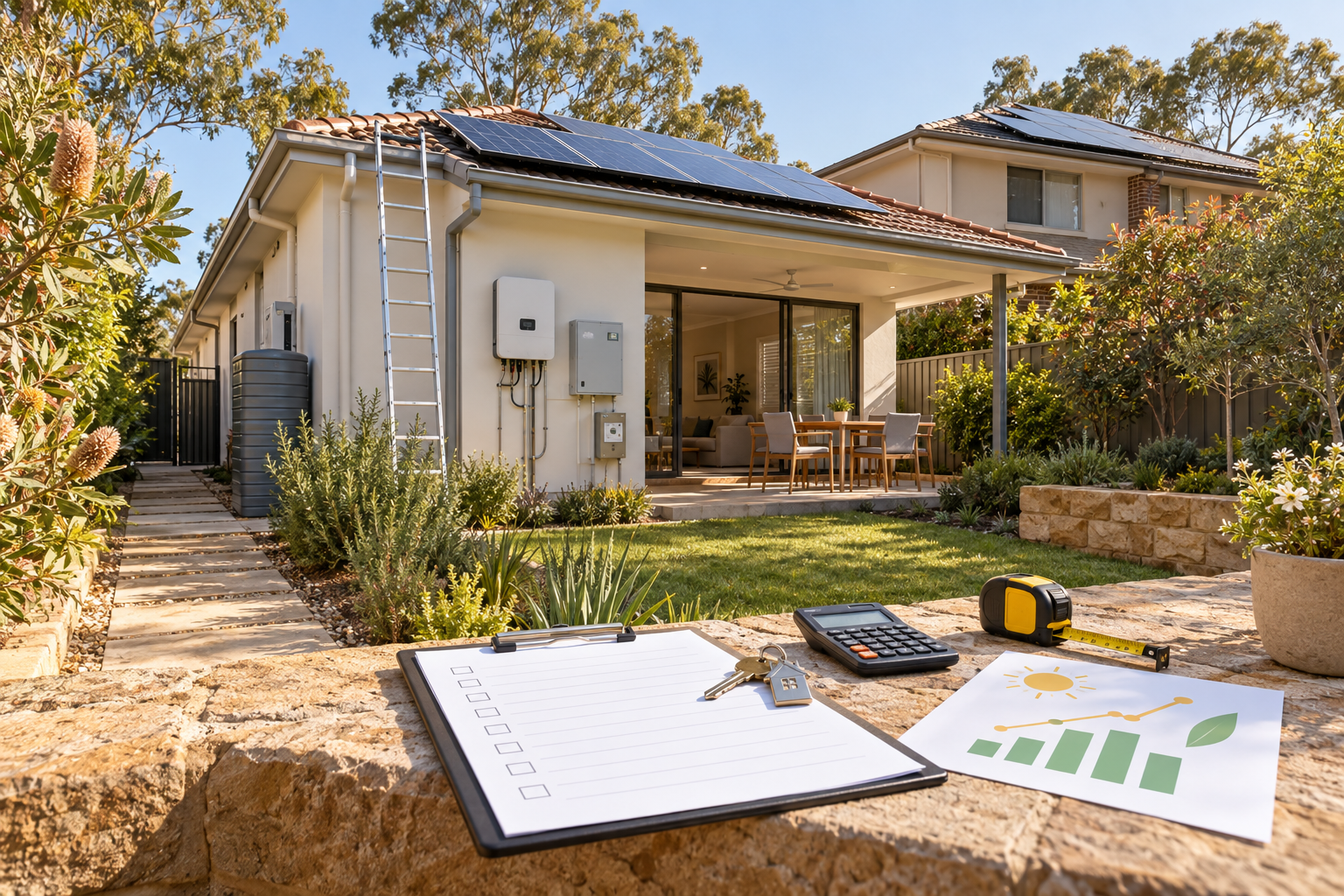
Buying a home with solar panels in NSW: checks before you make an offer
Solar panels can be a useful feature when buying a home in NSW, but the panels alone do not tell you whether the system will suit your household or remain economical to operate. Before making an offer, check who owns the system, what equipment is installed, whether records are available and whether the roof and electrical work appear to have been maintained.
Confirm who owns the solar system
Ask whether the panels were purchased outright, installed under a finance arrangement, leased, or supplied through another agreement. A system that looks like part of the property may have separate contractual terms. Request copies of the installation paperwork, invoices, warranties and any agreement that may need to be transferred or settled when the property changes hands.
Do not rely on a listing description alone. Ask the selling agent for a clear written explanation and have your conveyancer check whether any relevant obligation or security interest needs attention before exchange or settlement.
Check the equipment, not just the panel count
Record the approximate age, manufacturer and condition of the panels, inverter, meter and any battery. The inverter is particularly important because it is a key working component and may have a different warranty period from the panels. Look for accessible installation information, visible damage, exposed cabling, unusual corrosion or water entry around roof penetrations.
A household's electricity use also matters. A larger system is not automatically better if the home has low daytime consumption, limited usable roof space, shading or an older inverter. Ask for recent electricity bills and any available production information, while remembering that past output is not a guarantee of future savings.
Inspect the roof and installation quality
Solar equipment should be considered alongside the condition of the roof. If the roof may need repairs or replacement, ask how the panels would be removed and reinstalled, who would organise the work and what cost may be involved. Check gutters, flashing, roof penetrations, drainage and signs of leaks as part of the broader building inspection.
For an apartment or townhouse, establish whether the roof, panels, meter area and related cabling involve common property or strata approval. The strata records may show maintenance decisions, access arrangements, insurance questions or planned works that affect the system.
Ask about warranties, approvals and maintenance
Collect the installer details, serial numbers, warranty documents and maintenance history where available. Ask whether the system was installed by an appropriately qualified contractor and whether any approvals, certificates or compliance documents were provided. If records are incomplete, treat that as a reason to investigate further rather than assuming the system is compliant or problem-free.
Where the system is material to your decision, consider an inspection by a suitably qualified solar or electrical professional. A general property inspection may not test generation performance or assess every electrical component.
Build solar into the whole ownership budget
Solar can affect household running costs, but buyers should still budget for electricity, repairs, insurance, cleaning where appropriate, inverter replacement and possible roof work. If a battery is present, ask about its age, warranty and usable capacity. If a system is leased or financed, include the ongoing payment in your affordability assessment.
Solar should be one part of the decision, not the reason to stretch beyond a comfortable purchase budget. Compare the property's condition, location, insurance, maintenance needs and likely energy use before deciding what the feature is worth to you.
A practical pre-offer checklist
- Confirm whether the system is owned, leased or financed.
- Request invoices, warranties, certificates and available electricity records.
- Check the inverter, battery, cabling, roof penetrations and signs of water entry.
- Ask how future roof repairs or replacement would affect the system.
- For strata property, review records and clarify common-property responsibilities.
- Allow for repairs, insurance, equipment replacement and ongoing electricity costs.
Solar panels may improve a home's appeal and running-cost profile, but the value depends on the system's condition, ownership terms, energy use and the property around it. Careful checks before making an offer can help you compare the feature realistically and avoid inheriting an obligation you did not understand.
Sources
News insight
 Sep 30, 2026
The RBA has raised rates again: what NSW property buyers should review now
The RBA has raised the cash rate to 4.60 percent. Here are practical checks for NSW property buyers...
 Sep 29, 2026
Sydney housing segments are moving differently: how to compare value and affordability
Cotality data shows different Sydney housing segments are experiencing different conditions. Here is...
 Sep 28, 2026
Building and pest inspections in NSW: checks to complete before you buy
A practical NSW guide to building and pest inspections, report limitations, maintenance risks and qu...