

Sydney buyers need a property-type comparison, not a single market headline
Sydney buyers are entering a more selective market, where a single headline about prices or auction results is not enough to judge value. The latest Domain auction results recorded a preliminary 53 per cent clearance rate for Sydney for the week ending 3 October 2026, with 523 auctions scheduled and 333 reported. That level of activity points to a market where preparation and property selection matter more than chasing a broad market call.
Why property type matters more than the headline
Apartment, townhouse and detached-house markets can behave differently because buyers are comparing different ownership costs, locations and levels of supply. Cotality's indices are designed to track changes across housing markets and property types, while controlling for differences in property characteristics. That makes the data more useful than relying on one median or one suburb conversation, but it still needs to be paired with local evidence.
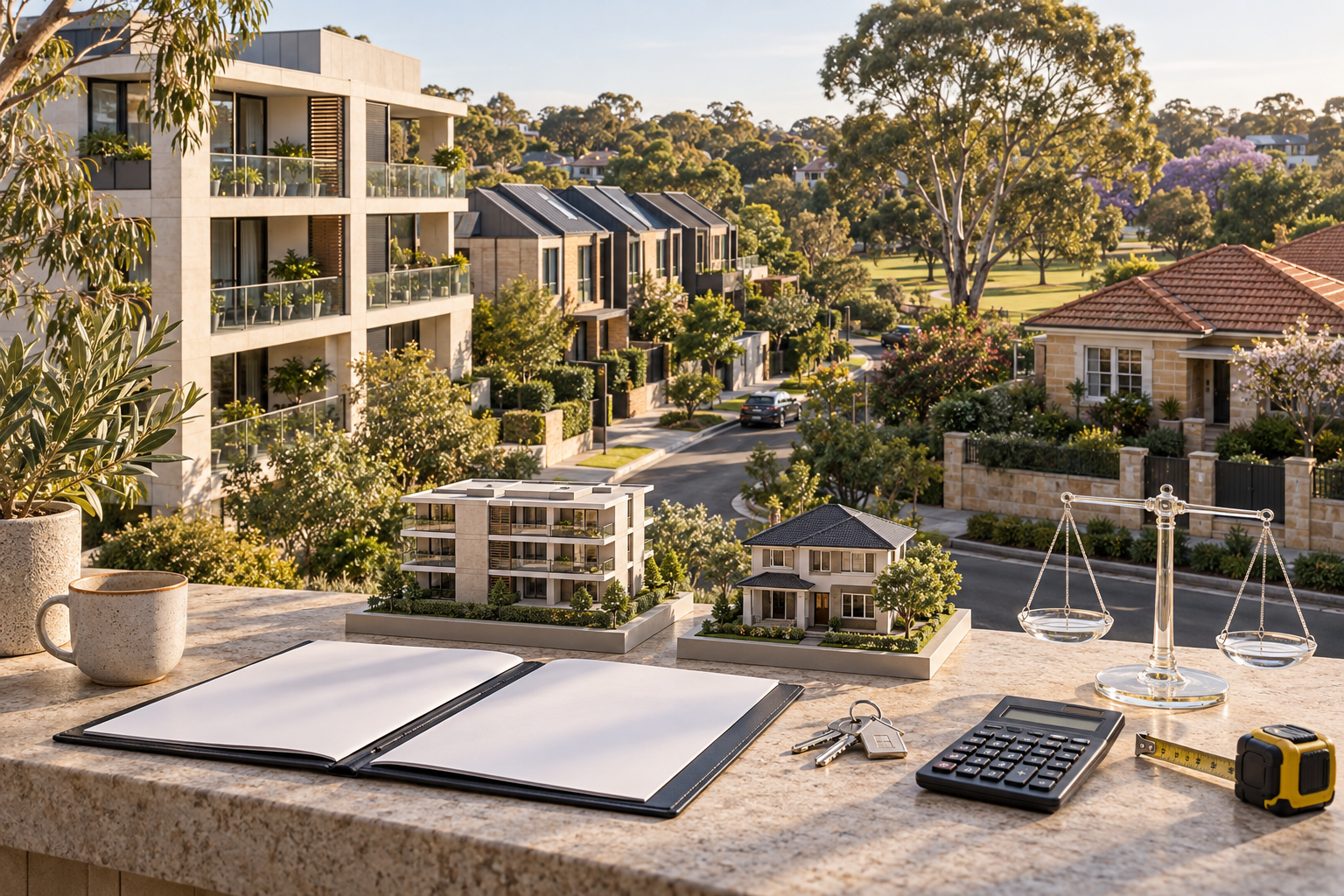
For example, an apartment may offer a lower entry price but bring strata levies, a sinking-fund position, insurance arrangements and possible major works into the decision. A townhouse may provide more space, but owners still need to check shared areas, maintenance responsibilities and the quality of the owners corporation records. A detached home may offer land and greater control, but it can also bring higher purchase costs, repairs and a different commute or amenity trade-off.
A practical comparison before making an offer
Start with the household budget, not the advertised discount. List the expected mortgage repayment, council rates, insurance, utilities, maintenance and, where relevant, strata or owners corporation costs. Then test how the budget would cope with an unexpected repair, a change in income or a period of higher everyday expenses. This is a planning exercise, not personal financial advice.
Next, compare like with like. Look at recent sales for the same property type, similar land or floor area, comparable condition and a similar local setting. A well-presented apartment near transport should not be compared casually with a larger but poorly located house. The question is whether the property offers a sensible combination of price, liveability, ongoing cost and resale appeal.
Finally, treat an auction result as evidence rather than a verdict. A 53 per cent clearance rate does not mean every property is negotiable or that every unsold home is poor value. It does suggest that buyers and sellers should pay close attention to campaign quality, comparable sales, buyer competition and the reasons a property did not sell under the hammer.
What this means for Sydney buyers
- Compare the full ownership cost of apartments, townhouses and houses.
- Use recent comparable sales and local conditions instead of one citywide headline.
- Keep a cash buffer and make an offer that remains comfortable if conditions change.
A selective market can create opportunities, but the best opportunity is usually the property that fits the household plan and still makes sense after every recurring cost is included.