

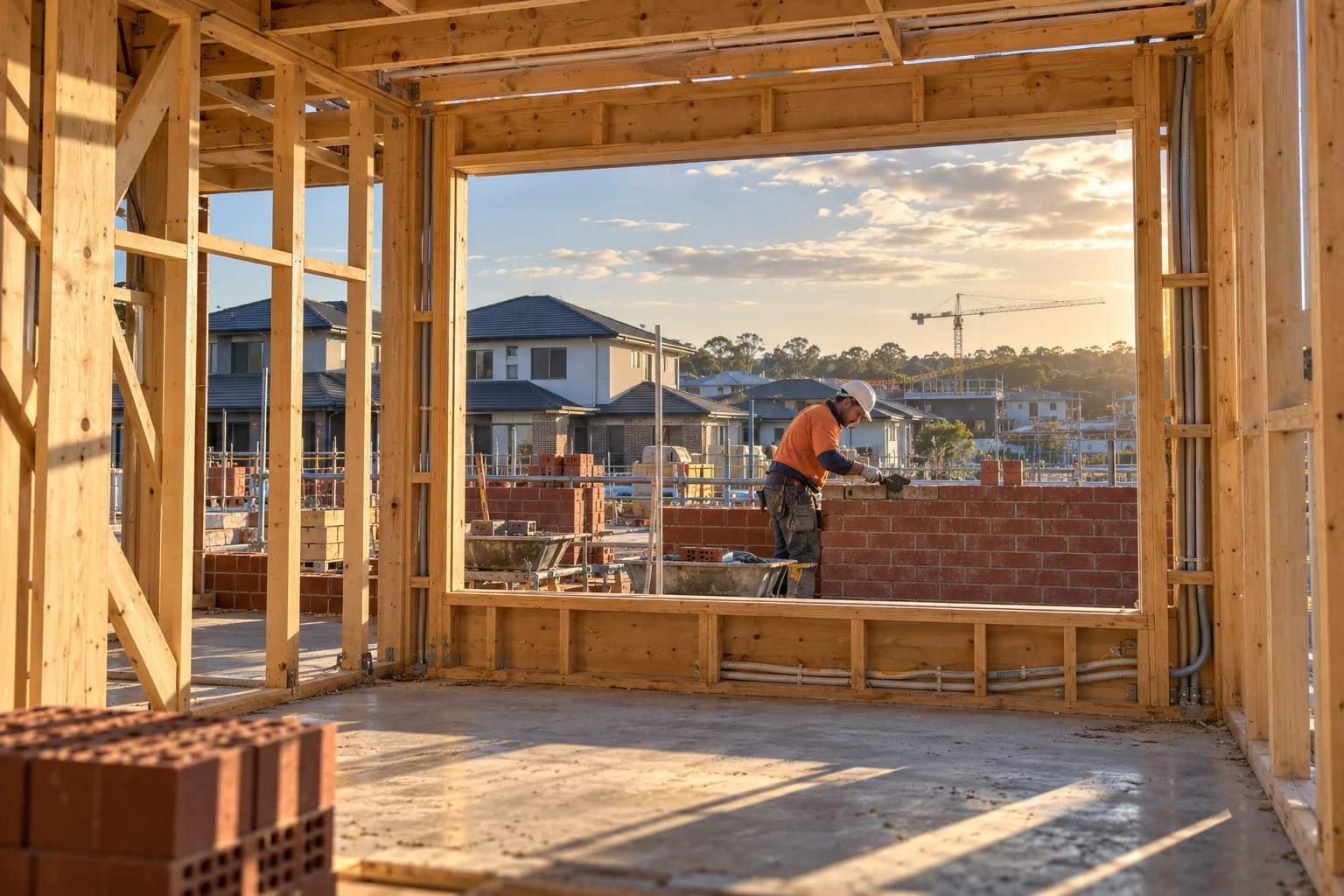
Slower new-home sales put the housing pipeline in focus for NSW buyers
The housing supply conversation is not only about how many homes have planning approval. It also depends on buyers committing, projects moving into construction and finished homes becoming available. Fresh reporting on weaker developer sales is a reminder to check each stage separately.
What the new-home sales warning says
Australian Broker reported on 29 October that sales at two major residential developers were lower than a year earlier. Mirvac sold 429 homes in the September quarter of 2026, compared with 619 a year earlier. Stockland recorded 1,506 net residential lot sales, compared with 2,117.
The report cited the Real Estate Institute of Queensland's concern that weaker demand could undermine future housing supply. That is an industry warning, not proof that every development will stall. The developers' figures also cover different products and portfolios, so they should not be added together or treated as a measure of NSW construction.
Approvals tell a different part of the story
The ABS August 2026 Building Approvals release showed total dwellings approved fell 6.1 per cent in seasonally adjusted terms to 16,953. Private sector house approvals rose 3.7 per cent, while private sector dwellings excluding houses fell 21.2 per cent.
These are national monthly approvals figures, not September sales or completed homes. One month's result should not be turned into a forecast for local supply or prices. The contrast between houses and other dwellings also matters: different building types can have different development timelines and financing requirements.
NSW buyers: ask which stage the project has reached
If you are considering a new home in Austral, Leppington, Edmondson Park or another growth area, start with the particular project rather than a national headline. Ask what approvals are in place, whether relevant site works or construction have started, and what evidence supports the proposed completion date. A display home or attractive marketing image is not evidence of progress on the home you are buying.
Have your solicitor or conveyancer explain the contract, inclusions, timing provisions and what happens if completion is delayed. For an off-the-plan purchase, understand the difference between an indicative date and your contractual position. Obtain professional advice rather than assuming there is a general right to cancel or receive compensation.
Keep the waiting period in the budget
A lower advertised price will not necessarily offset a longer period of rent, storage, temporary accommodation or changing finance costs. Ask your lender how approval conditions and your circumstances would be reassessed before settlement. Moneysmart notes that pre-approval does not guarantee the final loan, because both the borrower and the property still need assessment.
Compare a new home with suitable established alternatives using total cost, location, condition and timing. Include buying costs and a usable cash buffer. Avoid relying on a predicted price recovery, a future interest rate change or an assumed rental return to make the purchase affordable.
A practical takeaway for sellers and buyers
Sellers of established homes should not assume a supply warning will immediately lift their property's value. Recent comparable sales, competing listings and the condition of the home remain the useful evidence. Buyers can use the latest reports to ask better questions, not to rush into a contract.
The key distinction is simple: a sale, an approval, a construction start and a completed dwelling are different milestones. Find out which one applies to the property you are considering before building your plans around it.
This article provides general information, not personal financial or legal advice.