

Property risk checks buyers should complete before making an offer

Buying a home is about more than the building, the street and the price guide. The surrounding land, drainage, vegetation, access and planning controls can affect how comfortable a property is to own and how much care it may need over time.
That does not mean every property with a creek nearby, a sloping block or established trees is a poor choice. It means buyers should complete practical checks before making an offer, rather than relying only on the inspection or listing description.
Check flood and drainage information
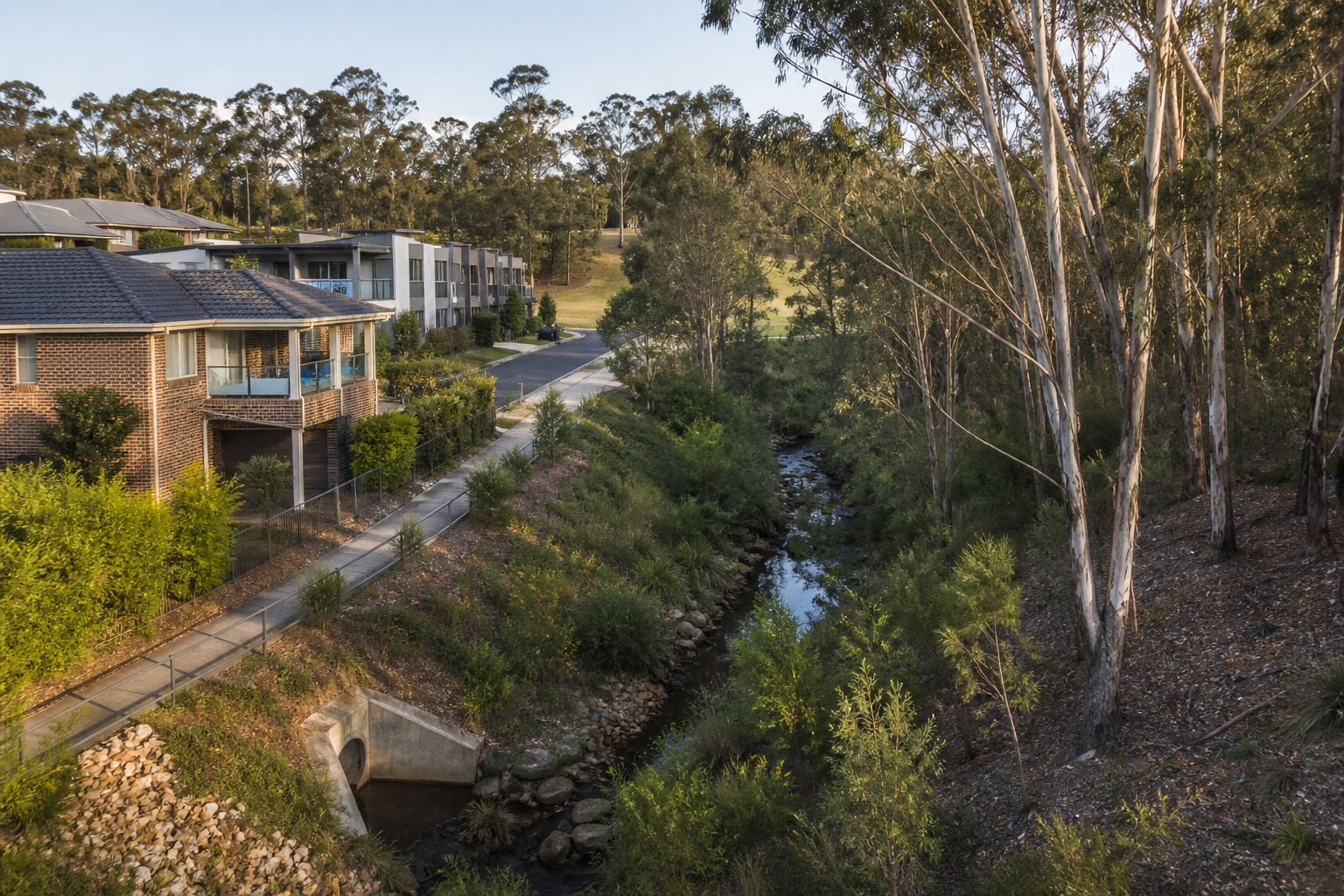
Look at the property's position in relation to waterways, low-lying roads, drainage channels and nearby open space. NSW Government flood information can help buyers understand local hazards, but online maps are a starting point rather than a substitute for property-specific advice.
During an inspection, look for signs that water may collect or move through the site. These can include damp smells, staining, unusual ground levels, blocked drains, retaining walls, water marks, damaged garden edging or a driveway that falls towards the home. Ask the selling agent whether the property has experienced water entry or drainage problems, and consider a qualified building inspection.
Consider bushfire and vegetation exposure
Properties close to bushland, grassed reserves or heavily vegetated corridors may need additional bushfire checks. Review the relevant NSW bushfire information, observe access roads and consider whether vegetation management, construction requirements or insurance questions may be relevant.
Look beyond the backyard. Check the direction of nearby vegetation, the number of access routes and whether a narrow street could make an emergency exit more difficult. These observations are not a risk rating, but they can help you ask better questions before committing to a purchase.
Inspect the slope, retaining walls and boundaries
A sloping block can provide attractive views and useful design opportunities, but it can also involve retaining walls, stairs, drainage and maintenance. Check whether walls appear stable, whether water is directed away from the house and whether fences sit on the correct boundary.
Where the site has visible cracks, leaning structures, soft ground or complex levels, ask a qualified professional to assess the issue. Buyers should also confirm whether extensions, sheds, pools or retaining structures have the approvals they need.
Review planning and future changes
Before making an offer, search the NSW Planning Portal and local council information for planning controls, nearby development applications, road changes and land-use proposals. A quiet outlook today may change if adjoining land is approved for construction.
Check the property's zoning, heritage or environmental constraints where relevant, and ask your conveyancer or solicitor to explain any title, easement or covenant information. These details can affect renovations, access, privacy and future resale appeal.
What buyers can do before making an offer
- Check flood, bushfire and planning information using official NSW sources.
- Walk the site after rain when practical and look at drainage, slopes and retaining walls.
- Arrange building, pest, conveyancing or specialist advice where the property presents extra questions.
- Allow for possible maintenance, insurance and improvement costs in your overall budget.
Good due diligence is not about finding a perfect property. It is about understanding the property you are buying, asking clear questions and making a decision that fits your budget and plans.