

What buyers should check about local planning before making an offer
A property can look right today and still be affected by changes planned for the surrounding area. A new road, apartment proposal, school expansion, drainage project or change in land use can influence traffic, outlook, noise, construction activity and future liveability.
This does not mean every proposed project will proceed, or that a planning application automatically makes a property a poor choice. It does mean buyers should include local planning checks in their normal due diligence before making an offer. The goal is to understand the wider setting, not to predict the future with certainty.
Start with the property and its immediate surroundings
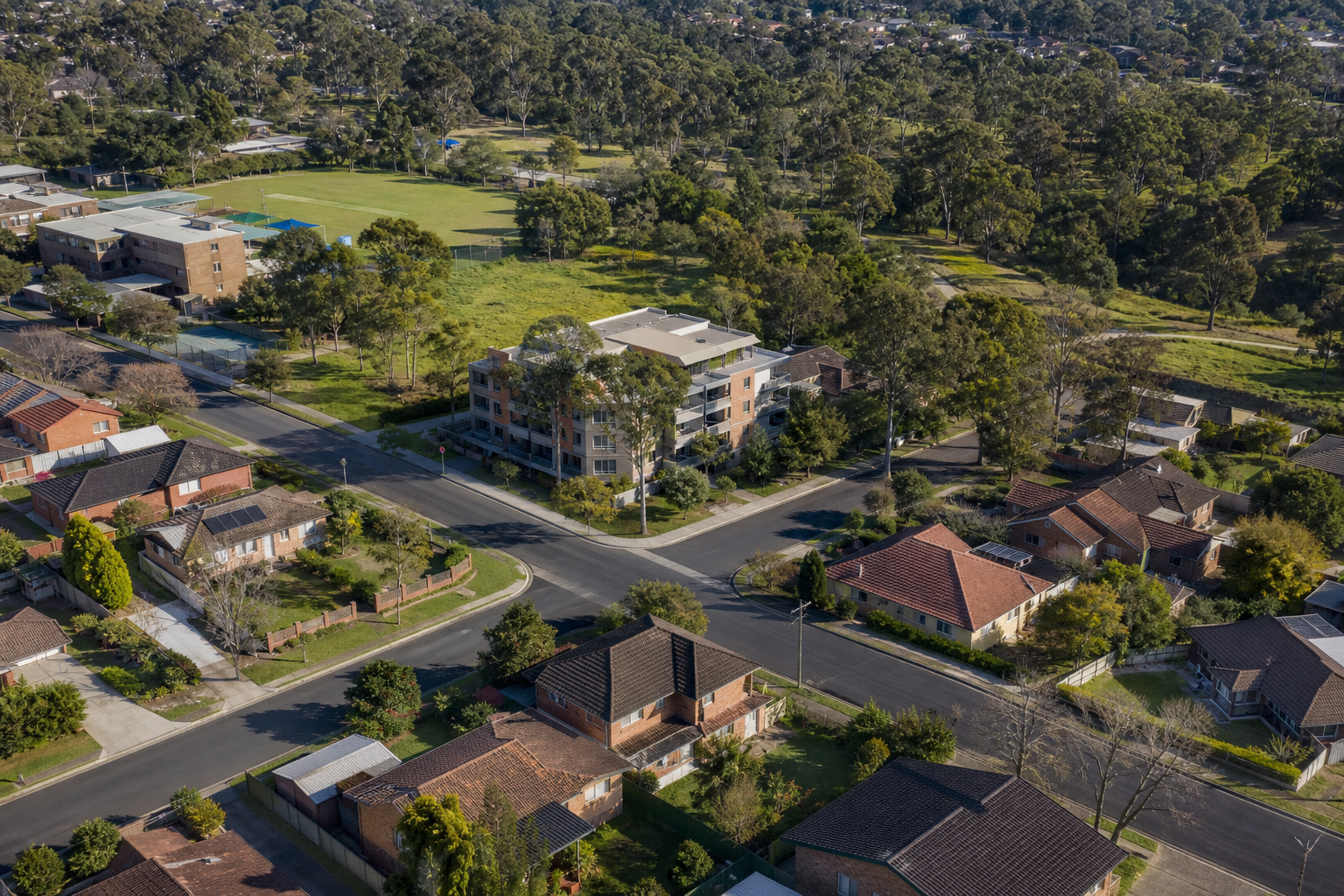
Begin by looking beyond the front boundary. Check the adjoining properties, the next street, nearby open space and the routes used to reach the home. Consider whether the property sits beside a reserve, school, commercial area, busy road, drainage corridor or land that could be redeveloped.
Walk the area at different times if possible. A quiet inspection during the day may not show school traffic, evening parking pressure, weekend activity or construction noise. These observations are not a substitute for official information, but they can help you identify questions worth investigating.
Use official planning information
NSW buyers can use the NSW Planning Portal and relevant council information to understand zoning, planning proposals, development applications and other controls affecting an area. Search using the property address and then widen the review to nearby streets and larger sites.
Pay attention to the difference between an approved project, an application under assessment, a planning proposal and a broad strategic plan. These stages do not carry the same level of certainty. Read the available documents rather than relying only on a project title or a short online summary.
Questions worth asking
- What is the current zoning? Zoning can influence the types of buildings and activities that may be permitted in an area.
- Are there nearby development applications? Look for applications that may affect traffic, construction, privacy, views, sunlight or local noise.
- Is a planning proposal being considered? A proposed change may alter future development potential, but its outcome and timing may remain uncertain.
- Are transport or infrastructure projects planned? Road changes, rail works, utility projects and drainage upgrades can create short-term disruption and longer-term benefits or trade-offs.
- Could the property itself be constrained? Heritage controls, flooding, bushfire risk, easements, access and other planning matters may affect renovations or future use.
Keep planning information in perspective
Planning information is one part of a buying decision. It should be considered alongside the property's condition, contract, strata or owners corporation information, insurance position, ongoing costs, finance arrangements and recent comparable sales.
Buyers should also be careful with assumptions. A proposed development may change, be refused or take years to progress. On the other hand, a site that appears inactive may still have a long-term planning pathway. Where a matter could materially affect the decision, ask a qualified conveyancer, solicitor, town planner or other appropriate professional for advice.
A simple pre-offer planning checklist
- Search the address and nearby major sites through official NSW and council planning resources.
- Record the status of any application or proposal and note the date of the information.
- Visit the area at more than one time of day when practical.
- Ask specific questions about noise, traffic, privacy, access and future construction.
- Keep the planning findings with your other contract and property due diligence.
What this means for buyers
A thorough planning check can make a property comparison clearer. It may confirm that a location suits your priorities, identify a trade-off that needs to be priced into the decision, or show where professional advice is needed before signing. It is a practical step that helps buyers make decisions based on the property and its surroundings, rather than relying only on listing photos or a first inspection.
This article is general information only and is not legal, financial or planning advice. Obtain advice for your own circumstances before making a property decision.
Sources
News insight
 Oct 19, 2026
Time on market is becoming a bigger buyer signal in Sydney
Why Sydney buyers and sellers should compare time on market with local property evidence.
 Oct 18, 2026
Older listings are building up: what Sydney sellers should review before relaunching
A practical guide for Sydney sellers reviewing pricing, presentation, campaign feedback and competin...
 Oct 17, 2026
Sydney housing values have fallen for six months: what buyers and sellers should check now
Sydney housing values have fallen for six consecutive months. The latest data makes property type, l...