

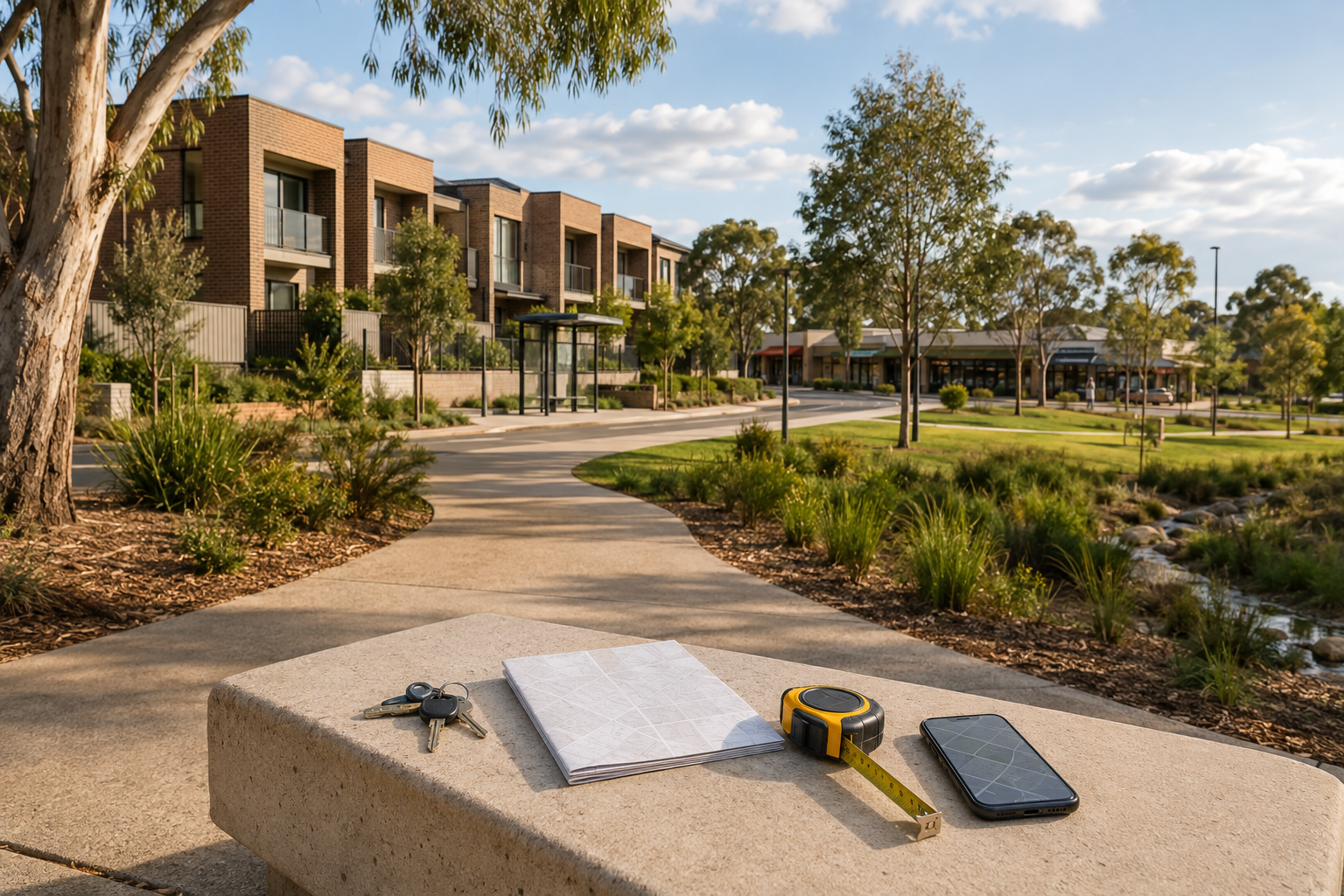
Before you buy: test the suburb, not just the property

A property can look right during a short inspection and still feel very different once you test the surrounding suburb. Travel time, nearby services, planning changes, drainage and everyday convenience can all affect how comfortable a home is to own and live in.
This evergreen guide is designed to help buyers ask better questions before making an offer. It is general information only and is not legal, planning or financial advice.
Test the daily journey
Check how the suburb works at the times you would actually use it. Consider the trip to work, school, shops, healthcare and public transport, including the walk from the property to the nearest stop or station. A route that looks short on a map may feel different in heat, rain, darkness or heavy traffic.
If possible, visit more than once. A quiet weekend inspection may not show weekday congestion, school drop-off activity, evening noise or parking pressure. These practical observations can be just as important as the home's finishes.
Look beyond the closest amenity
Make a short list of the services your household needs regularly. This may include supermarkets, pharmacies, parks, childcare, schools, medical services, recreation and local community facilities. Check whether they are genuinely convenient or merely nearby in a straight-line measurement.
Buyers should also think about future needs. A suburb that works for one stage of life may become less convenient after a job change, a growing family or a change in mobility. The goal is not to find a perfect location, but to understand the trade-offs clearly.
Check planning and environmental context
Review the available planning information for the property and its surrounding area. Nearby development, transport changes, new housing, drainage corridors or changes to open space can affect noise, traffic, outlook and access. Do not assume that a project shown in a listing or discussed informally has been approved, or that an indicative plan will proceed exactly as described.
Where relevant, check flood and drainage information and ask independent professionals to explain anything that may affect the property. A suburb check is not a substitute for a contract review, building inspection, valuation or specialist advice.
Use a simple comparison checklist
- Test the main journeys at realistic times of day.
- List the services that matter most to your household.
- Check planning, transport and environmental information from authoritative sources.
- Visit the street and nearby routes more than once.
- Record questions for your conveyancer, inspector, lender or other qualified adviser.
Make the decision in context
Local liveability is part of the value of a property, but it should be considered alongside price, condition, ownership costs, finance and future plans. A careful suburb review can help buyers compare homes more honestly and avoid relying on a polished listing description alone.